
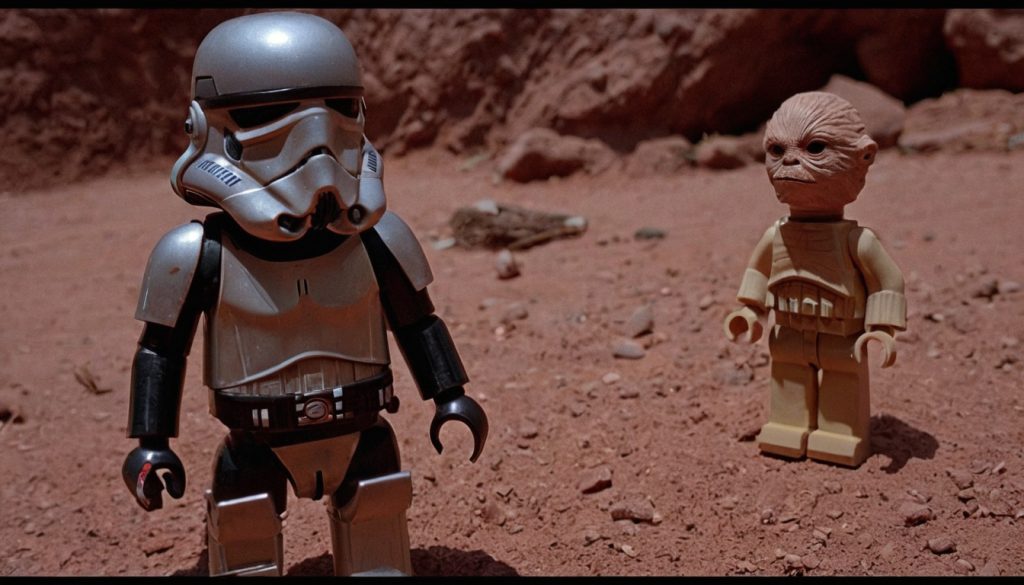
A loose Star Wars figure may have an authentic-looking body but a questionable weapon, recut cape, disturbed torso seam, or mismatched limb. Before bidding, consigning, or requesting an appraisal, classify every component separately. Otherwise, an original-complete auction result may be mistaken for evidence supporting a repaired, incomplete, composite, or reproduction-accessorized figure.
What do original, repaired, restored, composite, and reproduction mean for loose Star Wars toys?
For loose Kenner-era Star Wars toys, classify the body, accessories, and interventions separately. Original means factory-issued for the documented variant; repaired means original material was rejoined or altered; reproduction means a later-made replacement. An authentic body with a questionable weapon cannot be described as wholly original.
A loose Star Wars figure and its accessories must be classified separately
The following definitions apply primarily to loose 3¾-inch original-era Kenner figures. Attribute licensed non-U.S. issues only when a specialist reference documents the character, market, sculpt, factory details, and accessories.
- Original-complete: An original figure with every correct, documented factory-issued accessory for that exact variant.
- Original-incomplete: An original figure missing one or more required accessories.
- Repaired-original: Predominantly original material with a disclosed rejoined seam, limb, or structural repair.
- Restored: Original material altered to improve appearance, such as added paint or replaced soft goods.
- Composite-original or married: A figure assembled from original parts that did not leave the factory together.
- Reproduction-accessorized: An original figure accompanied by a later-made cape, weapon, helmet, staff, or removable component.
- Inconclusive: Available evidence does not support a reliable attribution.
Record separate findings for the body, limbs, paint, torso seams, sockets, cape, weapon, helmet, and other removable equipment. Useful descriptions include “original figure with unverified accessory” and “original body with disclosed repair.” Grading-company terms can differ, so consult the service’s current policy rather than assuming that an auction description uses identical definitions.
What do original, repaired, restored, composite, and reproduction mean for loose Star Wars toys shown as an editorial planning reference.
Legitimate Star Wars production variants are not automatically repairs or reproductions
Factory stamps, paint placement, plastic color, and accessory shades can vary across documented releases. Compare a difference with the exact character, sculpt, market, and recognized reference image. Leave an undocumented difference inconclusive rather than presenting it as a rare variant. The next step is determining whether the body supports an original-factory finding.
How can the body of a loose Star Wars figure be authenticated?
An original loose Star Wars figure is identified through a consistent combination of sculpt, molded marks, plastic, paint, and factory assembly. No country-of-origin stamp proves authenticity by itself.
- Match the sculpt. Compare the head, hands, clothing folds, belt details, proportions, and limb shapes with clear photographs of the documented variant.
- Record molded marks. Transcribe the copyright, date, manufacturer, and country exactly, including location and orientation. Photograph both soles, peg holes, and marked legs.
- Inspect without disassembly. Under diffuse light and moderate magnification, examine both profiles, torso seams, shoulder openings, hip sockets, and plastic surfaces.
- Compare plastic and paint together. Look for consistent color, sheen, wear, and aging across the torso and limbs.
Country-of-origin marks identify a Star Wars figure only when the sculpt and release also match
Country-of-origin marks are supporting evidence, not a verdict. Authentic figures can have absent, scarred, shortened, or market-specific markings associated with documented tooling changes. A convincing stamp paired with the wrong sculpt, paint scheme, or limb type remains a warning. Record observations before conclusions, consistent with the conservative documentation principles in the National Park Service Museum Handbook.
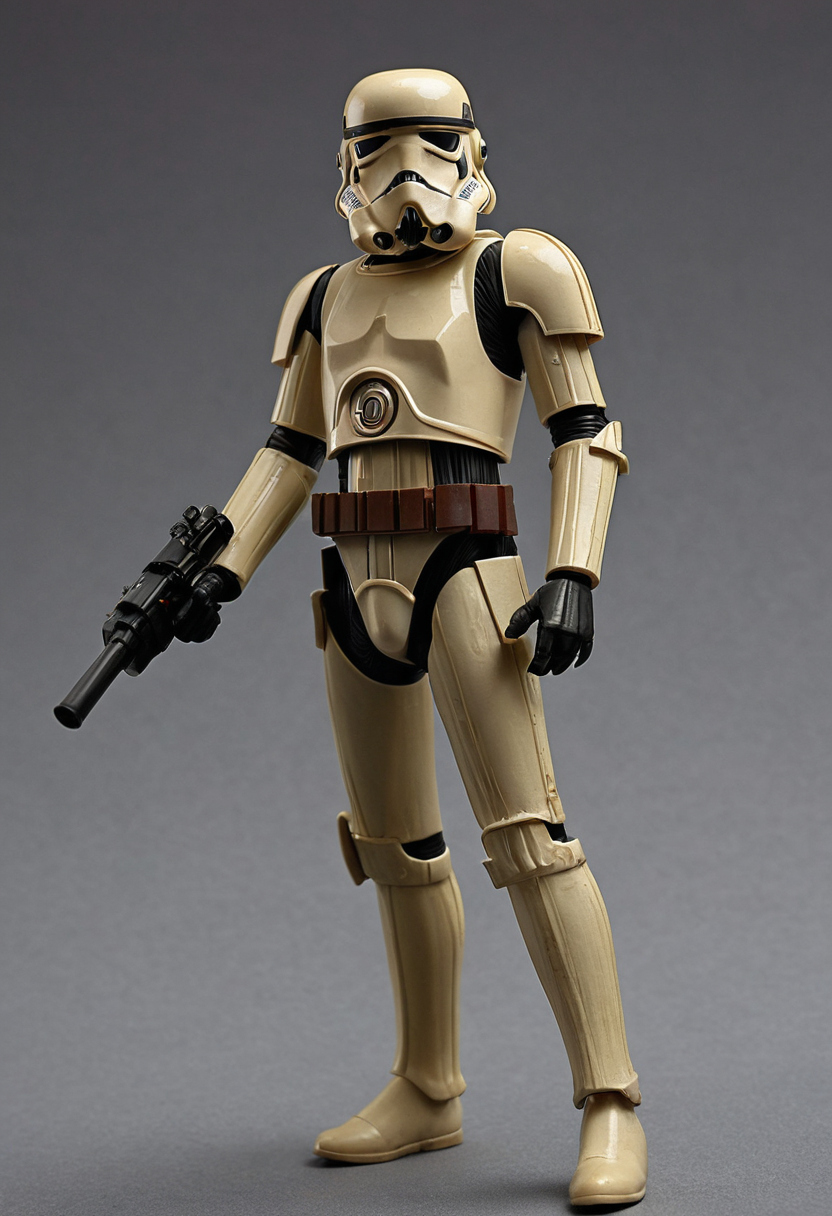
How can the body of a loose Star Wars figure be authenticated shown with practical context cues.
Factory seams and limb sockets can reveal whether a Star Wars figure has been opened
Many applicable torso shells were joined by sonic welding, a factory process that uses high-frequency vibration to fuse contacting plastic surfaces. Normal weld lines can be uneven. Greater concerns include glossy adhesive, separated or clamped seams, melted edges, stress whitening, socket gouges, and mismatched limb wear. Do not pull limbs or split the torso to investigate.
Paint consistency can support but cannot independently prove Star Wars figure authenticity
Factory paint can vary in placement and coverage. Repainting becomes more plausible when paint covers scratches, pools in recesses, crosses established mask boundaries, or has a different gloss from surrounding areas. Ultraviolet response can prompt further examination, but it cannot prove age or authenticity alone. Weapons, capes, and removable equipment still require separate findings.
How can original Star Wars weapons, capes, and removable accessories be distinguished from reproductions?
Weapons, capes, staffs, and removable equipment require component-level authentication because an original figure can carry a later replacement. Mold geometry, production evidence, material, color, texture, and documented character pairing should agree. No single folk test establishes authenticity.
Star Wars weapon authentication depends on mold details and documented accessory variants
Compare the accessory with a verified example of the same variant, photographed from identical angles under consistent light. Inspect its outline, thickness, grip, sculpted ridges, lettering, mold seams, injection gate, ejector evidence, and edge profile. For removable equipment, check construction, fit, finish, and documented pairing. Color resemblance, translucency, or a snug fit is insufficient by itself.
Float, drop, sound, bend, flexibility, and light-transmission tests can produce overlapping results among original variants and reproductions. Exclude scraping, heat, solvents, pins, and disassembly because they can damage the component.
How can original Star Wars weapons, capes, and removable accessories be distinguished from reproductions shown with practical context cues.
Star Wars capes and soft goods should be checked for cut, texture, fastening, and aging
For vinyl capes, compare surface texture, edge shape, collar opening, arm slits, thickness, and flexibility with a verified matching issue. For cloth pieces, inspect weave, hems, stitching, closures, and printed details. Uneven recutting, fresh thread, artificial staining, or printing over worn fabric can indicate alteration. After classifying the accessories, inspect the body for repair or assembly from multiple figures.
What evidence shows that a loose Star Wars toy has been repaired or assembled from other figures?
Repair evidence usually appears as disturbed seams, adhesive residue, stress whitening, heat deformation, substituted limbs, fresh paint over worn surfaces, or mismatched aging. A defensible finding identifies the affected component, inspection conditions, and degree of certainty without alleging concealment.
Repaired Star Wars torso seams differ from ordinary factory-weld variation
An original factory-welded torso may have an uneven gap or limited plastic squeeze-out. Stronger evidence of later opening includes glossy adhesive bridging the joint, sanding, clamp impressions, displaced plastic, crack filler, or localized heat distortion. Several related signs should be present before describing a torso as opened or reglued.
Residue alone remains inconclusive because grime, migrated plastic additives, and factory material can resemble adhesive. In catalogue language, a repair restores physical function; restoration replaces or disguises lost material; customization deliberately changes factory appearance; and conservation stabilizes existing material with minimal alteration.
Mismatched Star Wars limbs and paint can indicate a composite figure
A composite, also called a married figure, contains parts assembled from multiple figures even if every part is vintage. Indicators include one limb with different discoloration, texture, paint aging, joint wear, or gloss, especially when its socket has stress whitening or tool damage. Documented factory combinations must be excluded first.
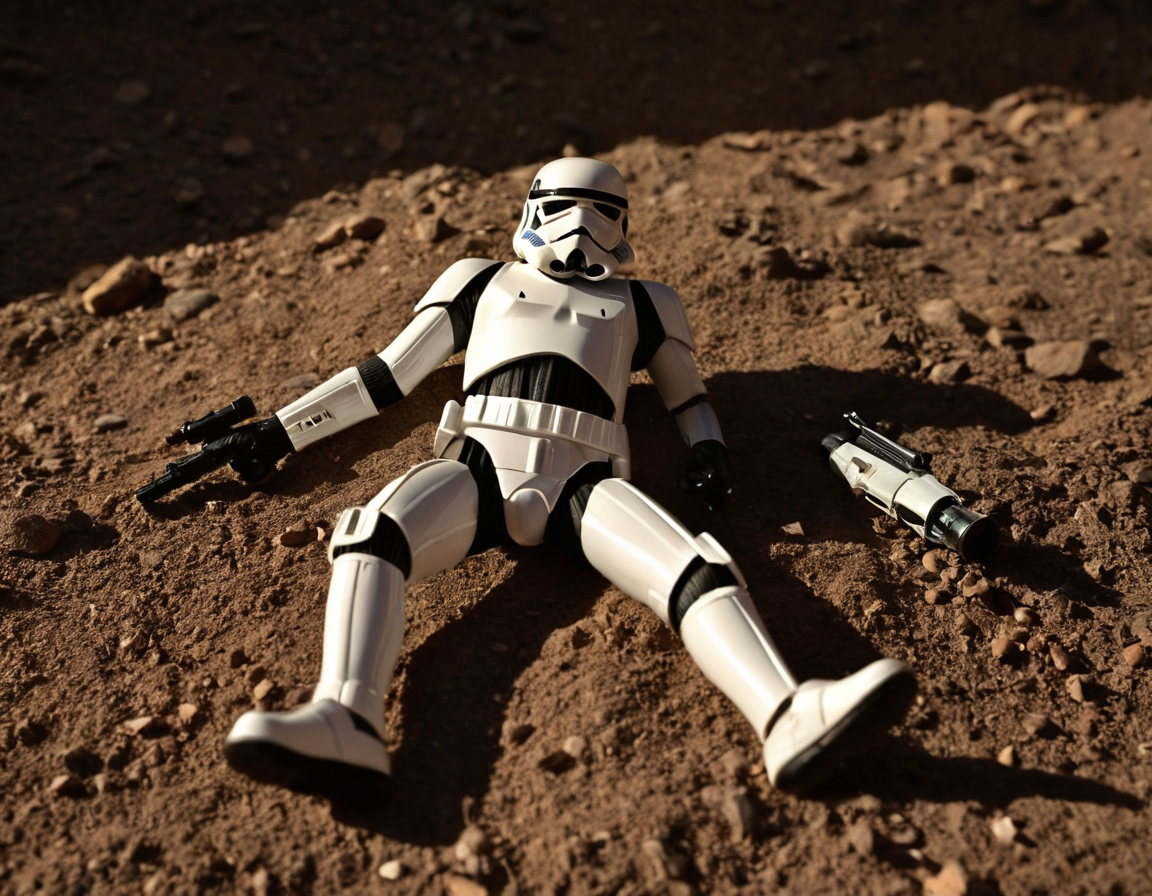
What evidence shows that a loose Star Wars toy has been repaired or assembled from other figures shown as an editorial planning reference.
- Confirmed: “Torso opened and reglued; visible adhesive at both side seams.”
- Probable: “Right arm probably replaced; wear and socket disturbance differ from the body.”
- Possible: “Paint may have been retouched at the boot.”
- Inconclusive: “Seam residue observed; origin undetermined.”
Do not open the torso, pull limbs, apply heat, scrape paint, or test residue with solvent. If a qualified examiner must use a volatile product, the U.S. Environmental Protection Agency recommends increased ventilation during use. Photographs and written records should document the evidence before bidding or consigning.
What photographs and records are required before bidding on or consigning loose Star Wars toys?
Obtain photographs that permit the body and every removable component to be assessed independently. Missing views reduce confidence but do not prove repair or reproduction.
A remote Star Wars figure appraisal requires a minimum set of views
- Full front, back, both profiles, top, bottom, soles, and every molded mark.
- Close views of torso seams, shoulder and hip sockets, and paint boundaries.
- Both sides of every weapon, cape, helmet, and removable accessory.
- Full-resolution images on a neutral background under diffuse light, with a ruler and neutral gray or color reference.
A Star Wars toy-auction bidder should ask for written disclosure of repairs and replacement parts
Ask about ownership history, repairs, replacement accessories, repainting, cleaning, and previous authentication. Paints and cleaning products are among the indoor sources of volatile organic compounds identified by the U.S. Environmental Protection Agency, so do not perform undocumented cleaning before examination.
Review the condition report, meaning the auctioneer’s written observations, along with the buyer’s premium, inspection deadline, return rights, and authenticity guarantee. Request specialist review when photographs cannot resolve material, seams, or tooling.
How should authentication affect a loose Star Wars toy-auction estimate?
Authentication determines which auction comparisons are relevant, not merely what percentage to deduct. Repaired, incomplete, composite, and reproduction-accessorized figures need separately matched evidence. Asking prices and unsold listings are not recorded sales.
Comparable Star Wars auction lots must match variant, completeness, condition, and disclosure
A hammer price is the winning bid before the buyer’s premium, taxes, shipping, and other charges. Record the character, sculpt, variant, accessories, paint condition, joints, repairs, grade, and provenance. For the sale, retain the auction house, title, lot number, date, currency, hammer price, premium treatment, condition report, and photographs.
Exclude bundled lots, inadequate photographs, unverified asking prices, and exceptional graded or provenance-rich examples that do not match the subject. This follows the same principle as matching condition and variant details in collectible-toy auction lots.
Condition comparisons should also account for documented damp-storage damage. The U.S. Environmental Protection Agency advises fixing wet or damp spots promptly to prevent mold growth, but moisture history alone does not prove that a figure is inauthentic.
An inconclusive Star Wars accessory should remain unverified in the estimate
Use neutral wording such as “Figure verified for valuation; weapon included but not authenticated and assigned no separate value.” If too few matched, disclosed sales exist, do not invent a numerical discount or predict rarity, future value, or grading results. Authenticate every component first, then select evidence that matches the object being offered.
Frequently asked questions
Are original loose Star Wars toys worth anything if their weapons or capes are missing?
Yes, but classify them as original-incomplete and compare them with sales of the same variant in similar condition. Do not apply an assumed percentage deduction from original-complete results without matched sales evidence.
Who manufactured the original vintage Star Wars toys, and how do licensed-market figures differ from U.S. Kenner issues?
Kenner manufactured the original U.S. action-figure line. Licensed figures sold in other markets can have different marks, paint, tooling, materials, or accessories. Attribute those differences only through references specific to the manufacturer, country, and release.